In Nigeria, food security has become a major challenge. Nigeria is witnessing rising food prices, increasing hunger in many households, insecurity on farmlands, and growing dependence on food imports.
In a bid to address these challenges plaguing Nigeria, experts view agriculture as the only viable solution. Government at all levels have also repeatedly echoed the significance of agriculture towards food security, and human capital development.
Although government speaks of agriculture as the bedrock of food security, economic development, and job creation, while also repeatedly echoing the need to invest in agriculture to boost local food production, a keen look at the 2025 budget performance of States in the South West region of Nigeria reveals that agriculture has not received the attention that it deserves.
Budget performance, a clear statement of how much commitment a government has given to different seconds of its economy in a past financial period, also reflects how much cash-backing government policies received within a given financial period. Thus, the intent of government, and its policy priorities are unmistakably clear, on the pages of its budget performance reports.
There is a lot to be said about the data released on agricultural budget performance across the six South West states. On the one hand, the data reveals that the amount of money expended on agriculture across the six states, is abysmally low, compared to the budgeted amount. Each year, billions of naira are allocated to agriculture, but much of the money never gets released for actual implementation of polices.
In Osun State for example, only 26.2 percent of the amount budgeted for agriculture was expended (#1,538,641,771.65 out of #5,873,657,360.00). Ogun State performed worse, expending just 21.9 percent of its agricultural allocation (#10,628,961,381.43 out of #48,555,065,625.32). Oyo State expended 28.5 percent (# 5,145,810,935.62 out of # 18,064,949,531.44), while Ondo State managed 33.8 percent (#1,379,652,575.10 out of #4,086,503,722.29). Lagos recorded a much better performance at 49.4 percent (#39,360,978,951.13 out of #79,674,697,525.72 as of Q3 2025), while Ekiti, which looks to have paid closer attention to agricultural development, did 81 percent performance (#22,345,030,266.00 out of #27,573,290,143.96).
The data presented above reveals a troubling situation. Where the South-West and Nigeria already grapple with high food inflation, and growing food scarcity, expending less than half of the funds allocated to agriculture means that the region, despite being agrarian, with limitless potentials to feed itself, has been nonchalant about developing one of its most critical social sectors.
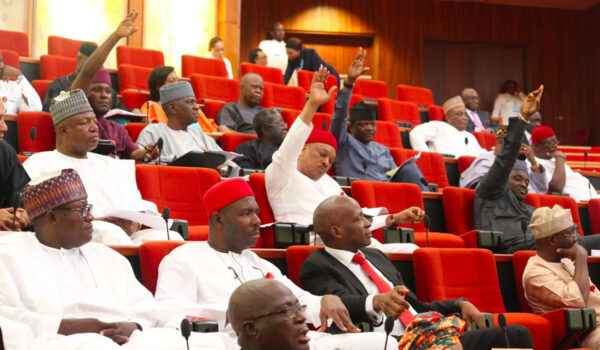
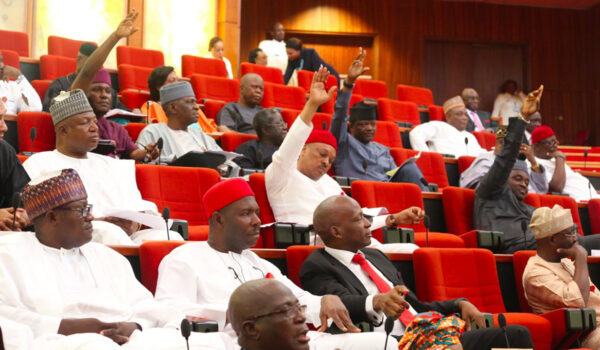
One other troubling reality that the 2025 budget performance reports of the South-West states presents is the prioritization of the funding of non-productive sectors of government, over the critical sectors, like Agriculture. The figures show that, in several states, budget implementation for State Assemblies surpassed that of agriculture. This raises serious questions about government priorities at a time when food security remains a serious concern.
For instance, Osun State achieved 80.9 percent budget performance on its House of Assembly, against the 26.2 percent performance it achieved in agriculture (#4,672,986,439.62 out of # 5,773,853,560.00); Oyo State achieved 47.3 percent performance on its State assembly, while it achieved 28.5 percent for agriculture (#8,417,917,647.10 out of #17,785,258,451.99).
A comparative look at the expenditure figures paints a troubling image – only three states in the South-West (Ekiti, Ogun, and Lagos) spent more on Agriculture than their respective Houses of Assembly. The others – Osun, Oyo, and Ondo – spent more on few members of their Assemblies, than they spent guaranteeing food security for the millions of their citizens.
While State Assemblies are important to the smooth running of the States, spending more on a non-productive Assembly of few Honourables, raises questions about the priorities of government, especially when critical sectors like Agriculture, with its huge influence on the livelihoods of millions of state people, are abandoned.
The results of the poor implementation of agricultural policies are visible everywhere. In recent years, food prices have increased significantly. According to the United Nations and the World Food Programme, over 31 million Nigerians are in acute food insecurity and severe hunger, and while this report subsists, governments in Nigeria continue to misplace their priorities.
One of the direct results of poor funding to the agricultural sector is the unavailability of modernized food storage facilities across the South-West, leading to overwhelming post-harvest losses recorded annually. According to The Organisation for Technology Advancement of Cold Chain in West Africa (OTACCWA), Nigeria recorded approximately N3.5 trillion to #5trillion in post-harvest losses in 2025, with an estimated #30 million to #40 million metric tonnes of food lost annually due to deficiencies in storage, transportation, and agricultural infrastructure. These are the important areas that the government should focus on if food security is highly prioritized.
There have been arguments in the public space about how the budgets allocated by the federal government to the state governments is insufficient. However, Ekiti State’s budget performance of 81 percent challenges the argument. If Ekiti State, unarguably the smallest in the South-West, can pay invest more in agriculture, the conversation moves away from financial incapacity, to lack of interest.
The South-West cannot achieve food security with mere talks, release of policy documents, and launching of agricultural programmes without applying real work. It requires governments to first make a decision to prioritize agricultural development through consistent investment, and untiring dedication to the provision of enabling environments to agricultural investors. For the agriculture sector, every naira that is unspent is a missed opportunity to strengthen food security.
The South-West is filled with agricultural potential that has not been fully explored. It is considered to be a fertile region for agricultural development. However, these potentials won’t feed citizens of the region. The important thing is the readiness of the State governments to be accountable and demonstrate how future allocations will translate into significant outcomes for farmers and consumers.



Oluwole Stephen oluwaseun On June 11, 2026 at 9:05 pm
Agriculture should be our top priority in this country.