In a country grappling with grave security challenges, from kidnapping and banditry to communal violence, billions of naira are allocated annually to what is generally known as security votes. Yet, insecurity, in one way or another, still persists across many communities in all 36 states of Nigeria. The safety of citizens has been questioned, while public trust continue to erode.
Security vote is the fund set aside by Governments in Nigeria from their monthly allocations and internally generated revenue to address security needs within their states. Figures vary across several the tiers of government and runs into billions of naira in States. These funds are not open to detailed public scrutiny or any auditing processes. Over time, it has raised concerns about transparency and accountability, especially in the States.
Former Governor of Ekiti State, Kayode Fayemi, who was also the head of the Nigeria Governors Forum, NGF in 2019 defended the concept of security votes, arguing that the transparent and proper utilization of the cash is what is required. This was after the then Chief of Army Staff, Tukur Buratai, and the Nigerian Governors Forum, NGF, bickered over the legality of the use of security votes by Governors.
According to reports from the Socio-Economic Rights and Accountability Project, SERAP, over #400bn is budgeted annually as security votes across the 36 states, while at least 10 Governors reportedly earmarked about #140bn for the same purpose in the 2026 budget year. These figures reflect the bulk of funds controlled under a system that operates with limited transparency.
Civil society groups including the Civil Society Legislative Advocacy Centre, CISLAC, Socio-Economic Rights and Accountability Project, SERAP, Transparency International Defence, and Security, TI-DS, BudgIT foundation, have been at the fore front of demanding transparency, accountability, and the probability of scrapping security votes.
Other civil society groups working in coalitions include, Amnesty International Nigeria, Connected Development, CODE, Rule of Law and Accountability Advocacy Centre, RULAAC, among others.
SERAP, on 16 January 2026, filed a petition against state governors at the Federal High Court Abuja, arguing that Nigerians have the right to know how public funds are spent. In its court filing, SERAP stated that ”Nigerians ought to know in what manner public funds, including security votes meant to ensure the security of life and property of Nigerians, are spent by the governors, and the FCT minister.”
The organization further warned that secrecy around security votes increases the risk of embezzlement, and diversion of public funds. According to SERAP, the lack of transparency is simply a violation of public trust.
EFCC has also expressed concern about states hiding under security votes for all sorts of infractions, including using state money to sponsor violence against the people, using state funds for personal projects and siphoning funds for other political and party interests.
For instance, the Economic and Financial Crimes Commission (EFCC) has publicly alleged that former Governor Willie Obiano diverted more than ₦4 billion from Anambra State’s security votes’ account into private companies and individual accounts instead of using it for security efforts. Prosecutors told a Federal High Court in Abuja that funds originally meant for security were transferred to entities with no documented contracts with the state government, and some sums were reportedly converted into United States dollars and handed over in cash on the instruction of government officials, raising serious questions about whether the money was ever used to improve safety or merely for personal benefit.
In some quarters in Nigeria, the perception that governors should not account for security votes needs to be addressed. This is so because the Legislature has the power to oversee the audit of all government accounts, including security votes. However, the fact that the legislature has failed to do this in the past because of incompetence or compromise does not change this mandate.
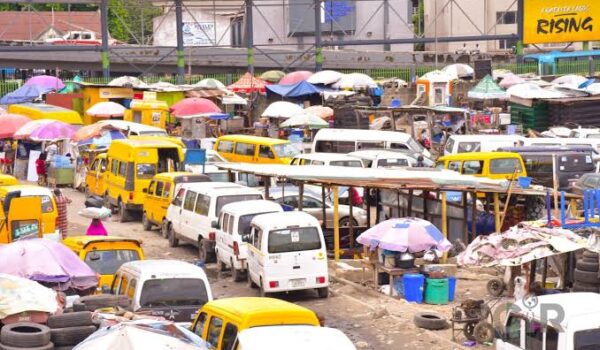
In many parts of the country, residents say they see little impact of these funds on their daily safety. A trader in Dada Estate market who asked not to be named, said despite government spending on security, they still contribute money to hire vigilantes to protect their communities.
Similarly, a resident of Kwara State who spoke on the condition of anonymity described the situation thus: “We hear that money is released for security every month, but here, we still contribute money to protect ourselves. At the end of the day, we are the ones paying twice. We pay with our money and as well pay with our lives.”
The National Bureau of Statistics in its latest report on crime and safety, revealed that Nigerians paid an estimated ₦2.23 trillion in ransom within a one-year period, with hundreds of thousands of citizens affected by kidnapping incidents nationwide.
The issue may not simply be about the availability of funds but how they are managed and accounted for. It becomes very difficult to track impact, measure effectiveness, or hold anyone accountable without adequate transparency.
Billions of naira are released every month in the name of security, yet in many communities, residents continue to pay twice with their money and with their lives. The lack of transparency makes it difficult to measure impact, track accountability, or assess whether these funds truly protect Nigerians. Whereas security votes are expected to enhance local security, and complement National Security efforts by the Federal Government, the figures have only continued to increase without commensurate impact on the safety of the people.
The question remains: are security votes a necessary tool to safeguard the nation, or have they become a legalized opportunity for corruption?




Comments