Before Nigerian music embraced the voices of women as bandleaders and instrumentalists, before female performers confidently occupied the centre stage of popular culture, male musicians dominated almost the entire music scene, leaving little or no room for women to lead vocals, let alone have their own music bands.
However, by the late 1960s and early 1970s, the industry had no choice but to give space to Serifatu Oladunni Oduguwa, also known as Queen Oladunni Decency, as its first-ever female guitarist, who would later pave the way for other female artistes and instrumentalists in Nigeria.
Serifatu Oladunni Oduguwa was born in 1949 in Noforija, Epe, in present-day Lagos State. She was born into a Yoruba Muslim family whose values emphasized discipline, modesty, and communal responsibility.
Although several accounts have documented her birthplace and early years, details about the identities and occupations of her father and mother remain scarce in publicly available historical records. This absence reflects a common challenge in documenting the lives of many pioneering Nigerian entertainers of the mid-twentieth century, particularly women, whose achievements were often overshadowed by the era’s patriarchal social structures.
Despite the limited documentation surrounding her parents, the values of perseverance and courage that later defined her career were evident from an early age.
Queen Oladunni Decency was unable to have extensive formal education, save for the primary education she received at Ladi-Lak Primary School in the Bariga area of Lagos State.
Growing up in Epe, a culturally rich environment where indigenous music accompanied social ceremonies, festivals, and religious gatherings, Oladunni developed a fascination with rhythm and melody. During her early years, she grew interested in music, moving from merely singing along to popular tunes. Her bond with early Juju music made her aspire to earn a place among the then-reigning Juju artistes.
However, Queen Oladunni Decency, being a young female, knew she would need more than interest alone to become one of the aces in the Nigerian music community. Without having what would set her apart and make her willingly accepted by the populace, she took the bold step of teaching herself guitar playing, having been inspired by Juju pacesetters such as Tunde King, Ayinde Bakare, and I.K. Dairo.
Around 1966, Queen Oladunni Decency met Gilbert Kayode Oduguwa through school and local entertainment circles in Lagos at a time when she was transitioning from her primary schooling at Ladi-Lak to her early music days. Their connection grew out of a shared involvement in the arts, as Gilbert was already a prominent leader of multiple local entertainment groups.
Reports have it that Gilbert Oduguwa supported her musical career and even played percussion within her band, creating a partnership that helped sustain her remarkable rise. They would later marry each other after three years of launching her own professional music band.
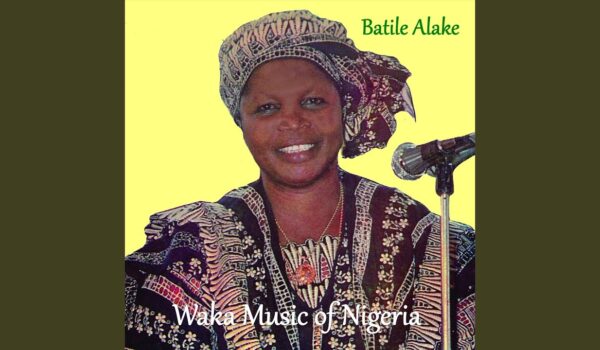
Read Also: Batile Alake: The Trailblazer Who Gave Waka Music a National Voice
After much effort, time, and dedication to mastering the strings, at just 17 years old, Queen Oladunni Decency took a revolutionary step by founding her own band, Her Majesty Queen Oladunni Decency and Her Unity Orchestra.
Not only was she the lead vocalist, she was also the guitarist and bandleader, roles almost exclusively occupied by men in Nigeria’s entertainment industry at the time. Her emergence challenged stereotypes about women’s capabilities and transformed perceptions of female participation in popular music.
Decency revolutionized the music scene and captivated audiences with her outstanding performances, laced with confidence, dexterous guitar playing, powerful vocals, originality, and elegant stagecraft.
As the principal songwriter and director, she was the absolute head of arrangements, dictating live cues, percussion tempos, and brass alignments from the front of the stage.
Decency did not only break the jinx by being the first female commercial guitarist in Nigeria, but also carved her niche by creating her own distinct style of Juju music, characterized by combining highly rapid, rhythmic Yoruba percussion with soft, emotive, yet powerful female vocal delivery.
Her arrangements heavily blended Christian gospel themes with traditional Yoruba folklore and high-tempo, groove-driven guitar compositions. She pioneered the blending of complex guitar solos with traditional Yoruba idioms, folklore, and proverbs. This sonic signature was so distinct that it was designated by fans and critics as “Mummy Juju” or “African New Tempo.”
Her artistry earned admiration alongside some of Nigeria’s Juju greats, including contemporaries such as King Sunny Ade, Ebenezer Obey, and Fatai Rolling Dollar. Music critics and fans frequently compared her highly melodic, groove-driven guitar arrangements to those of Juju titan King Sunny Ade.
In the 1960s and 1970s, she went toe-to-toe with contemporary male Juju icons, establishing a massive following in Western Nigeria.
In the early 1970s, Queen Oladunni Decency had her ultimate career breakthrough after releasing “Atupa Ma Iku,” which was widely recognized as her signature masterpiece.
Having formed her band in 1966 at the age of 17, it only took Decency eight years to release her landmark album, African New Tempo, in 1974, officially launching her into the mainstream commercial limelight across Western Nigeria.
Following this release, her band, Her Majesty Queen Oladunni Decency and Her Unity Orchestra, became one of the most sought-after live performance acts throughout the mid-1970s until her untimely passing in 1978 at the age of 28.
The exact circumstances surrounding her death remain unclear, as no authoritative public records have provided detailed explanations about the cause of her passing. What is certain is that Nigeria lost one of its most innovative musical talents at the peak of her career.
Before her untimely death, she released at least seven major studio albums, including her early LPs (1973–1974), Vol. 6 – African Mummy Juju (1976), and Vol. 7 (1977), among others. Some of her recordings include: Atupa Ma Iku, Ninu Igbagbo Lemi O Ma Yan, Alafia Logun Oro, Odun Yin San Wa Sowo, Metric System, Ijesa Progressive Union, Emi Yio Ma Yin O Logo, Chief S. B. Ajasa Oluwa, Mummy Juju Fans, and Pegan Pegan.
Nearly five decades after her passing, Queen Oladunni Decency remains a towering figure in Nigeria’s musical history.






Comments