Long before the emergence of modern Nollywood, pioneers of travelling theatre and indigenous filmmaking laid the foundation upon which the industry thrives today. Among those legendary figures was Alhaji Abdulsalam Sanyaolu, better known as Charles Olumo, fondly called Agbako, a man whose career spanned over seven decades and whose contributions helped shape Yoruba theatre and cinema.
Charles Olumo was born Abdulsalam Sanyaolu on February 25, 1923, into the family of Mr. and Mrs. Sanyaolu in the Egba Owode area of Abeokuta, Ogun State. Like many children of his generation, Sanyaolu received basic education under the colonial-era Form system. His formal education ended after primary school, compelling him to learn a trade. He subsequently apprenticed as an automobile mechanic in Ibadan, where he spent four years mastering the craft before relocating to Lagos for better opportunities.
For years, his life revolved around repairing vehicles around Tinubu Square in Lagos. At the time, nothing suggested he would one day become one of the most recognizable faces in Yoruba cinema. His family background was rooted in traditional music and drumming, exposing him early to indigenous artistic expressions that would later influence his understanding of performance and storytelling.
Although Charles Olumo was born a Muslim, around the early 1950s, he frequently accompanied friends to church activities. During one of such visits to the Apostolic Church in Mushin, Lagos, he attended rehearsals for a stage production titled Joseph and His Brethren. On the day of the performance, he volunteered to play the role of Joseph after the actor assigned to the role failed to show up. His performance impressed both the audience and the organizers, many of whom assumed he was an experienced actor.
The success of that performance opened doors to other church productions, where he was invited to train performers and participate in stage plays. It was also during this period that he acquired the name “Charles” following his baptism into Christianity, before he later returned to Islam.
It is noteworthy that his father initially opposed his interest in acting. Olumo once revealed that his father considered theatre an unsuitable profession and reportedly attempted to discourage him from pursuing it.
As his confidence grew, some theatre enthusiasts encouraged him to join established theatre troupes, including that of the legendary Hubert Ogunde. However, Olumo preferred independence and chose to establish his own group. Friends suggested naming the troupe after the famous Olumo Rock in Abeokuta, giving rise to the name “Charles Olumo.”
His famous nickname, “Agbako,” emerged years later after he portrayed a fearsome character in the movie Anikura. The character became so popular that the nickname remained with him for the rest of his life. However, according to his daughter, Adeola Abiodun Sanyaolu, Charles Olumo disliked being called Agbako because it was merely a character’s name.
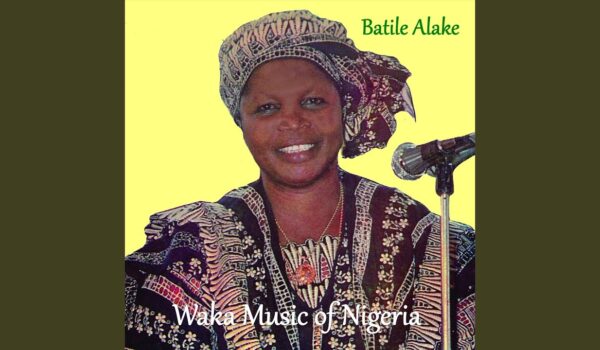
Read Also: Batile Alake: The Trailblazer Who Gave Waka Music a National Voice
He was distinctively different from other actors of his era. If there was one thing Charles Olumo mastered better than most actors of his contemporaries, it was the portrayal of villains.
His commanding presence, stern facial expressions, powerful voice, and intimidating gait made him the preferred choice for roles involving ruthless chiefs, warriors, traditional rulers, and mystical antagonists. These performances earned him the title “The First Bad Man” of Yoruba cinema.
One of his unique strengths was his ability to blend intense drama with humour. His mixture of the Egba dialect and the English language frequently added comic relief to even the most serious scenes, making him a fan favourite across generations.
Charles Olumo had his first major breakthrough after he was featured in Ija Ominira, a movie produced by the legendary Adeyemi Afolayan, popularly known as Ade Love. The movie gave him wider recognition and, over the years, he appeared in numerous classic Yoruba films, many of which became landmarks in Nigerian cinema.
He was an established actor who worked alongside some of the greatest names in Nigerian theatre and film, including Hubert Ogunde, Baba Sala, Ade Love, Jimoh Aliu, and many others who shaped the country’s entertainment landscape.
His acting career stretched across more than seven decades, making him one of the longest-serving actors in Nigerian entertainment history.
Throughout his 71-year acting career, spanning from 1953 until his death in 2024, Olumo did not self-produce a film or cinema movie. His production work was rooted in the Yoruba Travelling Theatre era when he founded and led the Charles Olumo Theatre Group, through which he staged, managed, and produced numerous live cultural plays and stage productions across Western Nigeria.
Before his death on October 31, 2024, Olumo, one of the oldest actors in the industry featured in numerous movies, including Ija Ominira, Aiye, Jayesinmi, Jagun, Saworo Ide, Ogbori Elemosho, Taxi Driver, Igbo Dudu, Amin Orun, Anikura (1982), Kadara (1980), Mosebolatan (1985), Atorunmo, and many others.
Though, Abdulsalam Sanyaolu “Charles Olumo”, has exited the stage, the legacy he built remains firmly woven into the fabric of Nigerian theatre and cinema. His unforgettable performances, distinctive style, and pioneering contributions ensure that his name will continue to resonate wherever Yoruba stories are told.






Comments