Long before Waka music became a household genre in Nigeria and produced celebrated stars such as Salawa Abeni, Olawunmi Adetoun, Decency Oladunni, Adebukola Ajao Oru, Foyeke “Ajangila” Ayoka, Ayinke Elebolo, Aduke Ehinfunjowo, Hairat Isawu, and Adijat Alaraagbo, Alhaja Batile Alake’s vision, innovation, talent, and determination transformed a local Islamic chant into a respected commercial musical genre.
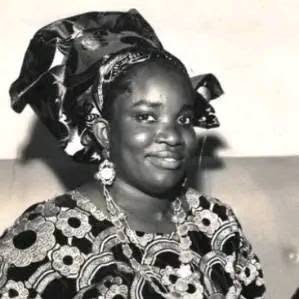
Widely regarded as the pioneer and founding mother of Waka music in Nigeria, Batile Alake was born into the Muslim family of the late Pa Seidu Gbadamosi and Madam Ajoke Gbadamosi in 1935 in the Okesopin area of Ijebu-Igbo, Ogun State.
As a result of her father’s belief that formal education was unnecessary for girls, assuming their roles belonged entirely in the domestic sphere, Batile Alake was not privileged to have extensive formal education beyond the primary education she received in her hometown.
During her childhood, traditional music was deeply woven into the social and religious life of Yoruba communities, and growing up in Ijebu-Igbo, a town known for producing talented traditional musicians, young Batile displayed a natural love for music.
Shortly after completing her primary education, she moved to live with her aunt, Saratu Eleba, who played a significant role in her upbringing.
Batile Alake’s journey into music was inspired by the Islamic and traditional musical environment in which she was raised. As a young girl, she was exposed to religious chants, women’s folk songs, and Yoruba oral traditions performed during naming ceremonies, weddings, and Islamic celebrations. These experiences shaped her understanding of music as both entertainment and a tool for moral instruction.
In the 1950s, at the age of 15, Batile Alake began her musical journey by performing in the Waka ensemble of her aunt, Rafatu Fowosere, where she was exposed to the fundamentals of chanting, rhythm, and audience engagement. After learning under her aunt and developing an interest in expanding her horizons beyond the family space, Batile had a brief stint as a backup vocalist for the Apala exponent, Alhaji Haruna Ishola.
In 1954, she went for a formal apprenticeship under Kaletin Soye, a leader of the Alasatu musical group in Ijebu-Ode. During this period, she served as a backup singer and acquired the skills that would later enable her to develop her own distinctive sound.
Read Also: Peter King: A Virtuoso Saxophonist, Jazz Lord
After completing her apprenticeship, Batile returned to Ijebu-Igbo and established her own musical group. What started as an Alasatu ensemble gradually evolved into a completely new style of performance. Through innovation, creativity, and a strong understanding of Yoruba culture, she transformed traditional Islamic women’s chants into what became known as Waka music.
Batile not only transformed the performance style of Waka music by interacting dynamically with audiences instead of sitting on stage like many other traditional performers, but she also modernized and commercialized the genre.
Prior to her emergence, Waka was largely performed by women during Islamic gatherings and community events. Batile expanded the genre’s appeal by introducing talking drums, sekere, agogo, and other Yoruba percussion instruments that created a richer and more energetic sound, making it suitable for concerts, festivals, and public entertainment.
Batile Alake’s place in Nigerian music history was firmly secured in 1959 when she recorded Eni Subu Parijo, becoming the first professional Waka musician to release a commercially recorded song. The record became a major success and opened the doors for Waka music to enter Nigeria’s growing recording industry.
Following this breakthrough, she released numerous records that strengthened her reputation as the leading voice of Waka music. Some of her notable recordings included Eni Subu Parijo, Iwa (Manners), Ore (Friends), Odun Titun Wole, and Berin Ba Je Ti O Yo, among others.
During the 1950s and 1960s, Batile performed extensively at concerts, social gatherings, and cultural events across southwestern Nigeria. In 1956, her popularity reportedly earned her an opportunity to perform at a high-profile event organized for the visit of Queen Elizabeth II, further solidifying her standing in the music industry.
Batile Alake was widely regarded as a strong force in the transition of Waka music from Islamic chants, following her decades of pioneering contributions to the genre. Even after younger artistes introduced new styles and faster rhythms, Batile remained revered for preserving the authenticity and cultural richness of traditional Waka music.
Beyond music, she was highly respected in her community and earned the traditional title of Iyalaje of Ijebu-Igbo, reflecting her status as a distinguished cultural ambassador and community leader.
After dominating the music scene for more than four decades, with approximately 50 recordings, including singles, EPs, and LP albums, Batile Alake gradually withdrew from active performance but remained a revered figure in Yoruba cultural circles. Her songs continued to enjoy airplay on radio stations and remained popular at community celebrations and traditional gatherings.
On August 10, 2013, the legendary Queen of Waka Music passed away in her hometown of Ijebu-Igbo at the age of 78.
Today, Batile Alake is remembered not only as a legendary singer but also as a revolutionary who created a path for female musicians at a time when public performance by women often faced social restrictions. Through discipline, professionalism, and artistic excellence, she demonstrated that women could achieve success while remaining deeply rooted in cultural and religious values.







Comments