The childhood season is meant to be a season for learning, discovery, play, and growth -intellectually and emotionally. It is meant to be a season where dreams are formed, and potential is shaped. For many children in our society today however, these critical seasons have instead become a season to labour.
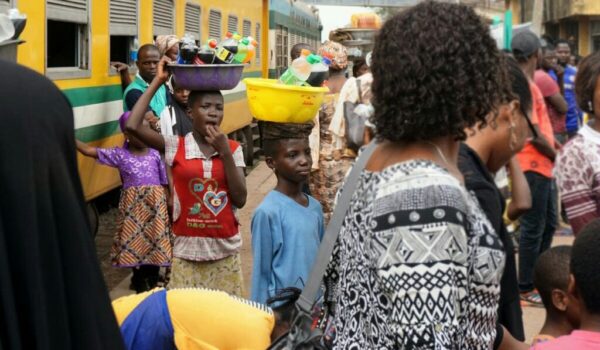
As some children wake up early to go to school to learn, memorize multiplication tables in their various schools, others memorize the prices of goods given to them to hawk, and as some prepare to write tests and exams, others are on the streets hawking under the sun, crossing from one road to the other, navigating traffic, and interacting with strangers.
According to the estimates released by the International Labour Organization (ILO), and the United Nations International Children’s Emergency Fund (UNICEF), nearly 138 million children were engaged in child labour in 2024. About 54 million of these children are in hazardous labour that is likely to jeopardize their health, safety, or development.
Although the latest data showcases a total reduction of over 22 million children since 2020, reversing a significant rise recorded between 2016 and 2020. While this can be considered a significant milestone, the world has missed its target of eliminating child labour by 2025.
Child labour varies; it doesn’t mean the chores children do at their various houses, nor does child labour mean running errands for parents or guardians after school activities. All these activities are expected for a growing child.
According to Education International, Child labour refers to work that is mentally, physically, socially, or morally dangerous and harmful to children and that interferes with children’s schooling by depriving them of the opportunity to attend school, obliging them to leave school prematurely, or requiring them to attempt to combine school attendance with excessively long and heavy work.
It is exploitation of a child’s right when a parent allows a child to be involved in child labour, working to replace education, and indirectly becoming the family’s main source of income or an alternate source of income. Children belong in school, not in work. It is never a child’s responsibility to bring income for the family.
Sadly, this is still happening around us today. A new UNICEF Data Brief states that nearly 1 in five children, an estimated 41 million, are engaged in child labour in Eastern and Southern Africa, with the region accounting for almost one-third of the global total and the highest number of children in hazardous work, including mining and construction.
Why does this continue worldwide?
There is a rigid fundamental mindset that must be seriously addressed, which is the mindset that “hardship builds character”. Many people believe that a very effective way of building a good and lasting character is by learning the hard way. Some also believe that children must be exposed to hard labour, believing that they would succeed because they also worked at a very tender age and survived every challenge that came with it. This is often because survival is easily confused with development.
There’s also the undeniable factor of poverty. Child labour occurs when families face financial challenges or uncertainty, whether due to poverty, sudden illness of a parent/caregiver, or job loss of a primary wage earner, or sudden economic hardship. In these difficult circumstances, children are pulled into working to support the family.
What are the hidden costs surrounding Child Labour?
Aside from the physical exhaustion that children experience while walking around and standing long hours under the scorching sun, exposure to harmful substances and the risk of trafficking pose great risks.
Children who are exposed to child labour not only lose access to academics, but they also lack confidence, suffer low self-esteem, poor social development, and lose the opportunity to dream freely like other children in society. Once a child is denied access to education and pushed to labour because of the financial status of the family, the poverty cycle continues. The future pays the price when a child works instead of learning.
Although roughly two-thirds of labouring children are enrolled in school, a large body of evidence shows that working children are more likely to leave school early. By leaving school early, young people give up competencies that later allow them to enter jobs with a steeper wage.
More dangerously, children risk being trafficked, especially if they are migrating alone or taking irregular routes with their families. Trafficked children are often exposed to violence, abuse, and other human rights violations.
How society sees child labour but walks away
As an individual living in Nigeria, when was the last time you saw children doing hard labour on the street and take a pause? Society seems to have found a way to remain indifferent about the issue. We buy from children, hire children as domestic staff, tagging struggling children as strong. We only feel sympathy towards them, but sympathy alone cannot drive children away from the street.
The problem is visible to everyone, but we don’t tackle it.
What then can be done?
The real change that is needed not only requires sympathy and awareness. The government must enforce child protection laws; communities must work hand in hand with the government to enforce laws; schools must by all means be made accessible for children; communities and advocacy agencies must not relent in their efforts. Most importantly, parents must be accountable and responsible for the upbringing of their children.
Individuals also have a significant role to play supporting programmes that help in taking children out of the street and back to school; learn to speak up when an unsafe condition is seen, and encourage parents to keep their children in school.
Very importantly, government and advocacy agencies must intensify family planning campaigns so that families are compelled to only have children that they can cater for. At the base of the poverty problem in Nigeria is irresponsible reproduction practices, and solving the problem of child labour will be eased by successful family planning campaigns.




Comments