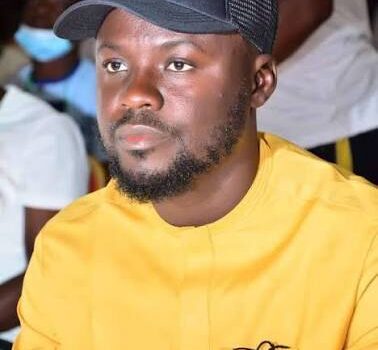
A governorship hopeful on the platform of the Social Democratic Party (SDP) in Oyo State, Oloye Saheed Oladele, has expressed confidence that the Olubadan of Ibadanland, Oba Rashidi Ladoja, will eventually support his ambition ahead of the 2027 governorship election in the state.
Oladele, who stated this during an interview on Afinju 90.7 FM’s current affairs programme, Hard Punch, described himself as the “only incontrovertible candidate” in the state, insisting that he enjoys the support of the masses and would not step down for any other candidate.
The SDP governorship hopeful was responding to a question on how he intends to contend with the political structure of another governorship hopeful, Sarafadeen Ali, an Ibadan high chief allegedly backed by the Olubadan.
Questioning the basis for the claim, Oladele said, “Who says Olubadan does not have an alternative to Sarafadeen? Is it not politics we are doing?”
He added, “The Kabiesi is my father, and I can assure you before the election, I am the one carrying his grace. Because I am the only incontrovertible candidate in Oyo State.”
Oladele also dismissed concerns over the internal crisis within the SDP, saying his political strength was not dependent on the party’s structure.
“My strength is not in any political party. I don’t rely on the strength of SDP to win the election. I have my own structure,” he said.
He maintained that the electorate, rather than political party structures, would ultimately determine who emerges as governor in 2027, arguing that the number of registered members of a political party does not necessarily translate into victory at the polls.
According to him, the APC, despite having what he described as the largest party membership in Oyo State, has about 153,000 registered members, a figure he questioned as being sufficient to determine the outcome of a governorship election in the state.
On the controversy surrounding the SDP governorship ticket, Oladele alleged that the party’s state chairman, Michael Okunlade, declared himself the governorship candidate without purchasing a nomination form or participating in the required primary process.
He claimed that he joined the SDP on April 7 after rejecting overtures from both the APC and PDP because, according to him, the SDP’s ideology aligned more closely with his political beliefs.
Oladele further alleged that he provided financial and material support for some of the party’s activities after joining, including the purchase of a generator for the party secretariat and support for party congresses and other activities.
He said he subsequently purchased his governorship nomination form from the party’s recognised leadership and paid into the SDP’s official account, adding that the party’s national secretary had confirmed that his payment was reflected in the party’s records.
According to him, he was the only person who purchased the governorship nomination form during the relevant nomination window, while Okunlade, whom he said was later uploaded on the Independent National Electoral Commission (INEC) portal as the party’s candidate, did not purchase a form.
Oladele said the matter was now before the court and expressed strong confidence that he would prevail, arguing that the issue went beyond an internal party dispute because, in his view, the alleged actions contravened provisions of the Electoral Act.
He also accused some political actors of attempting to use the SDP as a platform for negotiating support for another candidate ahead of the 2027 election.
Oladele insisted that he would not withdraw from the governorship race or trade his candidacy for financial inducement, saying his ambition was driven by a desire to offer an alternative to what he described as recycled political leadership.
He also outlined some of the policies he said he would pursue if elected governor, including strengthening anti-corruption measures, ensuring financial accountability in government, restoring local government autonomy and revitalising the state’s education sector.
Oladele further said his administration would prioritise local government autonomy, arguing that any governor opposed to genuine autonomy for local councils was “an enemy of the masses.”
He also promised to revitalise education in the state, describing the sector as being in need of urgent intervention.


Comments