Media professionals have been urged to prioritise balance, fairness and responsibility in reporting communal conflicts, as a means of promoting peace and stability in society.
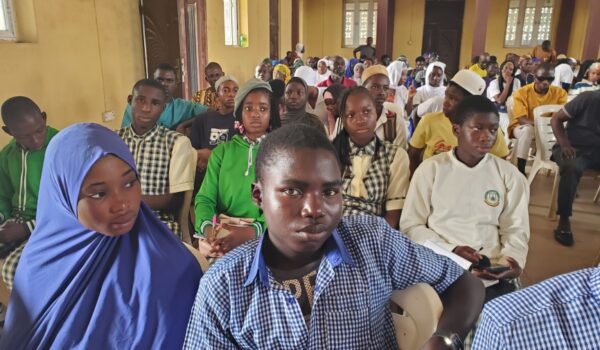
The call was made during a Media and Peacebuilding Workshop on Conflict-Sensitive Reporting for Community Harmony in Osun State, held on Thursday, April 30, 2026, in Osogbo.
The workshop, organised under the #PreachForPeace initiative and themed “Equipping Media Professionals with Skills for Responsible Reporting During Communal Crises,” brought together journalists and communication experts to strengthen ethical reporting, particularly in conflict-prone communities such as Ifon, Ilobu and Erin.
Speaking at the event, the Executive Director of Peace Education Advocate and Climate Action, Akinreyemi Buniyamin Olawale, emphasised the critical role of journalists in shaping public narratives. He noted that responsible reporting could help de-escalate tensions and foster peaceful coexistence.
According to him, the initiative had earlier trained 30 youths, 10 each from the affected communities, as part of efforts to build grassroots peace advocates.
“We started with the training for youth. We have trained 30 youths; 10 from each communities and more project will bring more peace as the project is to bring the communities together as one.” he said.
Also speaking, a lecturer in the Department of Mass Communication at Fountain University, Rasheed Adebiyi, stressed the need for journalists to adopt conflict-sensitive approaches and embrace solutions journalism.
He urged reporters to go beyond merely highlighting problems by exploring responses and offering insights that can help communities resolve disputes.
“Journalists should identify the issues, examine possible solutions and contribute to peacebuilding through their reports,” he said.
In a related presentation, Ridwan Olawale of the University of Ibadan highlighted the media’s role as a key partner in peacebuilding. He cautioned journalists to be mindful of language use, noting that careless reporting could escalate conflicts.
“The media space is powerful. It can either inflame tensions or help calm situations. As journalists, we must choose words carefully and promote peace because we are part of the society,” he said.
He further called on communities to embrace tolerance, mutual respect and peaceful coexistence as essential steps toward reducing violence.
Speaking via Zoom, Jare Tiamiyu traced the roots of the recurring crises between Ifon, Ilobu and Erin communities to longstanding land and boundary disputes. He noted that the outbreaks recorded in 2021, 2023 and 2025 were all linked to unresolved territorial issues.
He criticised sections of the media for what he described as shallow reporting during the crises, alleging that some journalists published stories without adequate investigation into the underlying causes.
Tiamiyu further claimed that during the peak of the conflicts, some media organisations in Osogbo benefitted from the situation, while also failing to uphold the principles of fairness and balance.
“While the responsibility of the media is to provide balanced and undiluted information, some outlets gave attention to only one side of the story, sidelining the other,” he said.
He also recounted an instance where he attempted to correct a report by a radio station but was allegedly asked to pay N50,000 before his clarification could be aired.
On post-conflict coverage, Tiamiyu decried what he described as a “media blackout,” noting that many outlets failed to report on the aftermath of the crises or follow up on developments in the affected communities.
He also criticised the Osun State Government for what he termed silence after the resolution of the conflicts, calling for sustained engagement to ensure lasting peace.
The workshop mainly organised by Future Builders Initiative was supported by the Federal Foreign Office of Germany and forms part of broader efforts to bridge divides and promote harmony across communities in Osun State.
Comments