A toddler dancing to a trending sound looks harmless. A baby’s first words captured in 15 seconds; a child’s tantrum turned into a skit, complete with background music and captions to which Nigerians laugh to, like, and share.
But somewhere between the ring light and the repost button, there is a quiet question of “when parents become influencers, who speaks for the child?”
Across Nigeria, social media has evolved from a place of connection to a place of attention-seeking. Parents, especially the young, digitally knowledgeable ones have discovered that family life sells. Birthday parties, school runs, bedtime routines and even discipline moments have now become content. Children, often too young to understand the camera pointed at them, become central characters in their parents’ online brands.
For many Nigerian parents, documenting their children’s lives is not new. Photo albums, video tapes and framed portraits have always existed, only the rate and permanence have increasingly changed. Unlike the family album tucked away in a cupboard, today’s posts live forever, searchable and shareable by strangers.
A child’s embarrassing moment, which was once a private family joke, can now rack up thousands of views. A child’s tears can now become viral content, and while the internet moves on quickly, digital footprints do not.
Some parents argue that they are simply celebrating their children. Others admit, quietly, that the numbers matter, saying likes translate to influence while, influence helps build a strong brand; and, in an economy where every extra income counts, children sometimes become the most engaging asset on the page.
Read Also: From Aso-Ebi to Intimate Vows: The Changing Face of Nigerian Weddings
Consent is at the heart of the debate, yet it is also the most complicated part. Can a three-year-old agree to being posted online? Can a child truly understand what it means to have their image consumed by millions?
In Nigeria, the idea of children having autonomy over their image is not strong yet. Culturally, parents are seen as the ultimate decision-makers. “It’s my child” is usually the argument. But the digital age demands new thinking.
A child who grows up to find their childhood mischief, punishments or vulnerabilities archived online may not share their parents’ enthusiasm. What was once “cute content” may feel like too much exposure. What was once a joke may become a source of shame.
The tragedy is that this conversation often begins when it is already too late, when the content has spread, screenshots taken, and control lost.
There is also the part of security. “Self-acclaimed” influencer wives of well-to-do husbands expose their children to the public all in the name of showing-off wealth for influence and likes. Showing what the children are being fed at home and the lunches they take to school, the schools they attend and many more, exposing not just the kids, but vital details about their families to people with bad intentions.
Not all family content is harmful. Many Nigerian parents share responsibly, blurring faces, limiting details, and focusing on moments rather than identities. The concern arises when content exploits vulnerability.
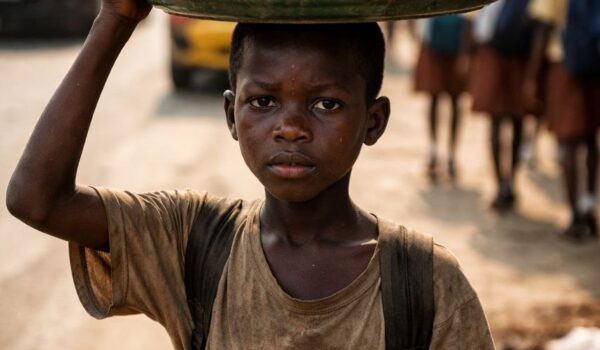
Videos of children being scolded publicly. Clips of minors re-acting adult jokes they do not understand. Content built around a child’s disability, poverty, or emotional distress. Boundaries blur in the race for engagement. The internet rewards what is dramatic, emotional and shocking.
Unfortunately, children cannot opt out of this system. They cannot say, “Please don’t post that.” They cannot negotiate contracts or protect their future selves.
Nigeria’s legal structure around child rights exists, but enforcement in the digital space remains weak. The Child Rights Act prioritises the best interest of the child, but social media is a boundary it hardly touches.
Platforms have policies, but regulations have not fully captured subtle violations of child rights like this one. Therefore, the responsibility falls heavily on parents, whose influence should come with accountability, but the influencer economy rarely pauses to ask ethical questions.
This is not a call to shame parents or ban family content, but a call to pause and reflect if the content is for the child’s memory or for metrics, and if the content will not haunt the child in future. Parents need to ask themselves: “Would I be comfortable if this video resurfaced when my child is 18? Am I protecting my child, or performing for an audience?”
We need to let children be children. Children deserve privacy, even from love. They deserve to grow, make mistakes and find themselves without an audience watching their every move
As Nigerian parents continue to navigate the digital world, they need to raise children, not content. Document memories they would see and be happy and not their vulnerabilities. They need to build platforms for their children and not footsteps that may one day become burdens to them.





Comments