President Bola Tinubu’s Special Adviser on Media and Public Communication, Sunday Dare, in a post on his official X handle, said that the poverty figures must be “properly contextualised” within the limits of global poverty measurement models.
“While Nigeria values its partnership with the World Bank and appreciates its contributions to policy analysis, the figure quoted must be properly contextualised. It is unrealistic,” Dare said.
The presidency’s remarks came after The World Bank Country Director for Nigeria, Mathew Verghis disclosed that despite Nigeria’s recent economic stabilisation efforts, about 139 million Nigerians are now living in poverty, warning that the country risks losing hard-won reform gains if policies are not translated into tangible improvements in citizens’ welfare.
Verghis, at the launch of the October 2025 Nigeria Development Update titled, “From Policy to People: Bringing the Reform Gains Home,” commended Nigeria’s bold reforms in the exchange rate and petroleum subsidy regimes, describing them as “foundational” steps that could reshape the country’s long-term economic trajectory
According to him, the reforms are already yielding results, growth is picking up, revenues have risen, debt indicators are improving, the foreign exchange market is stabilising, reserves are climbing, and inflation is gradually easing.
However, the World Bank chief cautioned that these macroeconomic improvements had yet to translate into improved living conditions for ordinary Nigerians.
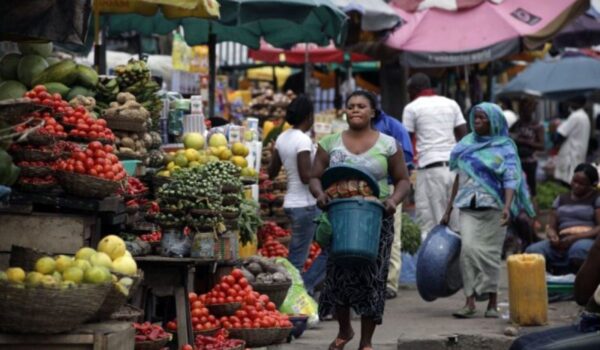
“Despite these stabilisation gains, many households are still struggling with eroded purchasing power. Poverty, which began to rise in 2019 due to policy missteps and external shocks such as COVID-19, has continued to increase even after the reforms. In 2025, we estimate that 139 million Nigerians live in poverty,” he revealed.
The Presidency explained that the 139 million figure was derived from the global poverty line of $2.15 per person per day, set in 2017 using Purchasing Power Parity, and should not be mistaken for an actual headcount of poor Nigerians, noting that when converted to nominal terms, the $2.15 benchmark equals about N100,000 per month at current exchange rates, which is well above Nigeria’s new minimum wage of N70,000.
“Poverty assessment under PPP methodology uses historical consumption data (Nigeria’s last major survey was in 2018/19) and often overlooks the informal and subsistence economies that sustain millions of households. The government, therefore, regards the figure as a modelled global estimate, not an empirical representation of conditions in 2025. What truly matters is the trajectory, and Nigeria’s is now one of recovery and inclusive reform,” the statement added.
According to the former minister, poverty estimates under the PPP methodology rely on historical consumption data, often overlooking the vast informal and subsistence economies that sustain millions of Nigerian households. The government, therefore, considers the World Bank’s estimate as “a modelled global projection, not an empirical representation of living conditions in 2025.”
He stressed that what truly matters is not the static figure but the direction of change. It said Nigeria’s economy is now on a recovery and reform trajectory, driven by policies designed to ensure inclusive growth and social protection.
It noted that the current administration had expanded a number of welfare and intervention programmes aimed at cushioning the impact of recent reforms, while laying the groundwork for long-term prosperity.
Among the key initiatives Dare highlighted are, “Conditional Cash Transfers: Expanded to reach up to 15 million households nationwide, with verified digital enrolment through the National Social Register. Over N297 billion has been disbursed since 2023 to poor and vulnerable families. Renewed Hope Ward Development Programme: A major new initiative targeting all 8,809 electoral wards, delivering micro-infrastructure, livelihoods, and social services directly at the community level.
“National Social Investment Programmes: Strengthened components such as N-Power, GEEP micro-loans (TraderMoni, MarketMoni, FarmerMoni), and Home-Grown School Feeding to protect jobs, encourage small enterprise, and keep children in school. Food Security Initiatives: Distribution of subsidised grains and fertilisers, mechanisation partnerships, and the revival of strategic food reserves to curb inflationary pressure on staples.
“Renewed Hope Infrastructure Fund: Financing critical energy, road, and housing projects to lower living costs and stimulate local employment, National Credit Guarantee Company: Expanding affordable credit to small businesses, women, and youth entrepreneurs through risk-sharing mechanisms with commercial banks.”
The Presidency maintained that the Tinubu administration was tackling Nigeria’s poverty challenge by addressing the structural distortions that have constrained productivity and inclusive growth for decades.
It cited ongoing reforms such as fuel subsidy removal, exchange rate unification, and the fiscal reallocation of funds toward productive sectors, describing them as “painful but necessary choices” to fix the root causes of poverty rather than its symptoms.
The government emphasised that economic recovery alone is not enough unless it translates into real welfare gains for ordinary Nigerians.
According to the statement, the administration’s medium-term priority is to ensure that macroeconomic stability leads to affordable food, quality jobs, and reliable infrastructure.
Investments are being ramped up in agriculture, manufacturing, and power reliability, including new gas-to-power projects and skill development hubs expected to boost job creation and reduce living costs.
Read Also: Presidency: Tinubu Has No Intention to Rule Beyond 2031
The Presidency added that the administration is consolidating its social protection architecture by integrating all welfare programmes under a unified, data-driven framework to enhance transparency and accountability.
This integration includes expanding the National Social Register and scaling up existing NSIP schemes, ensuring that “no vulnerable community is left behind.”
The Presidency concluded by reaffirming President Tinubu’s commitment to building “a resilient and inclusive economy” where growth directly improves living standards.
Source: Punch


Comments