The Minister of Humanitarian Affairs, Tanko Sununu, warned that millions are at risk of sliding deeper into poverty, especially in the North, which accounts for 65% of the country’s poor population, mostly smallholder farmers whose livelihoods have been wiped out by floods and drought.
He noted that the World Food Programme recently suspended key operations in the North-east, affecting more than 1.2 million people and leaving over 300,000 children at risk of severe malnutrition. UN estimates show more than 24.8 million Nigerians have faced hunger in recent years.
In response, the government has expanded the National Social Investment Programme. Over ₦419 billion in conditional cash transfers have reached 5.9 million households, while smallholder farmers have accessed ₦300,000 interest-free loans under the Government Enterprise and Empowerment Programme (GEEP).
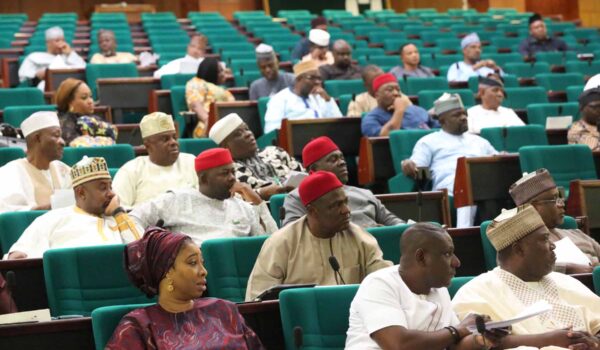
Meanwhile, the House of Representatives has inaugurated an ad-hoc committee to tackle Nigeria’s recurring flood disasters. Committee chairman Maidala Balami described flooding as a national emergency requiring a coordinated, long-term response, including prevention, early warning systems, and climate adaptation strategies.
Speaker of the House Abbas Tajudeen called for a shift from reactive to preventive flood management, urging closer collaboration among key agencies such as NEMA, the Ministries of Environment, Water Resources, and the Nigerian Space Agency.
So far this year, floods have killed at least 165 people, left 82 missing, and displaced nearly 44,000. Thousands of homes and farmlands have been destroyed, with Niger State alone experiencing one of the worst disasters in decades, leaving hundreds dead and missing.
Authorities warn that more than 1,200 communities across 30 states remain at high risk of future flooding.
Source: Premium Times







Comments