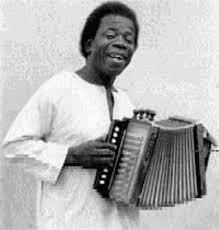
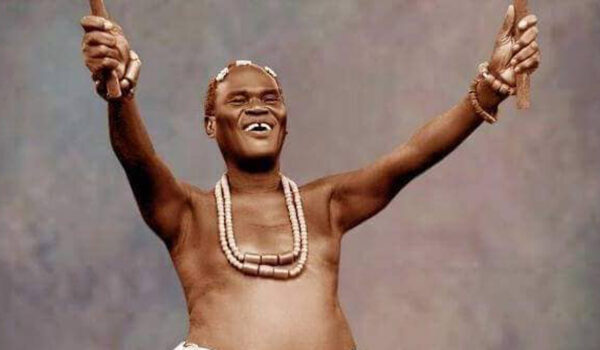
In the history of Juju music, Abdulkabir Babatunde King, widely known as Tunde King, should not be less referred to by Juju legendary singers as Ẹni a bá bá lábà ni Baba, for his immense contribution and efforts to the creation of Juju music, which has given birth to numerous popular singers of the same music genre before and after his death in the 1980s.
Before Tunde King’s demise rose another formidable Juju singer, Julius Oredola Araba, who grew to love Juju music from his tender age and would later transform the genre into a more loving and developed one, which other Nigerian music legends would learn from.
On May 24, 1922, Julius Oredola Araba was born in Lagos into the family of Mr. J. A. Araba, a native of Badagry, and Mrs. Ajayi Araba, who hails from the Republic of Benin. J. O. Araba then attended Baptist High School, Akilapa, Lagos, with one-time Minister of Information Mr. J. M. Johnson and Mr. Tajudeen Oki, former Attorney General of Lagos State.
In 1930, J. O. Araba learned how to play the guitar from his uncle, Pa. Olowogbowo, and he perfected his playing skills from Mr. Young Ladipo Bepo, Chief Odumosu, Dele Timple Ranco, J. O. Oyesiku, and Lanre Ogungbemi, who were his old friends.
In 1942, he joined the Nigerian Railway Technical School as an apprentice and later joined Pattern Makers also as an apprentice, but he was later transferred to Carriage and Wagon, Loco, Ebute Metta, as an artist because of his drawing skills.
J.O. Araba, or Speedy Araba as he was fondly called, started music around the 1940s as a sideman of many groups of the time, including that of Willy Isola Payne, which he joined in 1952.
K.
The group performed at the Mainland Cage, playing mainly calypso, just in front of the Western Hotel, and engaged in rivalry play with other groups, including the late legendary Adeolu Akinsanya and his Western Toppers Band.
In 1955, because of his love for music, he assembled four boys – Olaseni Tejosho, a collaborator and vocalist; Fatai Rolling Dollar, who brought his legendary guitar playing skills to the band; Eddy Polo, one of the boys who helped define their “Rhythm Blues”; and Ayo Vaughan, also a guitarist – to form a musical band named Rhythm Blues, playing mainly the traditional Yoruba Agidigbo. After some years, Araba’s wife joined the band as a professional singer, which made it a rare inclusion of female vocalists in that era’s Juju scene.
Read Also: Tunde King: The Pioneer, Maker of Jùjú Kings
The Blue Rhythm, which would later become the Afro Skiffle Group, revolutionized the music scene with Highlife, Calypso, Juju, and Palm Wine music styles explored, but unlike other Juju musicians, Julius Araba did not sing the praises of personalities.
In 1956, Speedy Araba became known after he performed at the event held at Odan, now Race Course, organized for then Queen Elizabeth II during her tour to Nigeria. He also played at the Grand Opening Ceremony of the Western Nigeria Television, W.N.T.V. Ibadan, and Nigerian Television Authority, N.T.A. 10 Lagos, both in 1960 and 1962 respectively.
Araba was not just a singer and lover of Juju, Highlife, and other genres of music, but was a game-changer in the music industry for his ingenuity, innovations, and initiative he brought into the music scene by incorporating the electric guitar and the Agidigbo, a large thumb piano, into mainstream Nigerian popular music.
Araba’s work is characterized by a blend of Highlife, Juju, and early jazz-skiffle influences. Some of his most enduring tracks are Easy Motion Tourist, K’elegbe M’egbe, Turaka, Money Love, Baby Awa, which showcases his Rhythm Blues style, Omo Lere Aiye, Osupa Ko Dabi Osan, Ma Gba Aya Alaya, among other notable tracks.
While his music was reigning, Araba maintained a rigorous career at the Nigerian Railway Corporation (NRC), spanning over three decades, where he rose through the ranks before he retired from the Railway as a Chief Mechanical Draughtsman in 1977.
Araba performed in concerts until his last day on earth, and sometimes he performed as a duet with his wife on vocals and Sèkèrè. Araba’s contributions to the music household in Nigeria can never be forgotten, as he brought different dynamics into the music game and also mentored legends who in turn served as inspiration and trainers for later icons in the Juju and Highlife music cycles.
During J. O. Araba’s playing days were people like Tunde King, Ojoge Daniel, C. A. Balogun, Tunde Nightingale, Ayinde Bakare, Irewolede, and others.
Speedy Araba gave up the ghost on September 15, 1989. His compositions remain impactful and influential till today, while some of his most famous tracks include many of his works preserved in archival collections like Afro Rhythm Parade Vol. 2 and through the Evergreen Musical Company.




Comments