In Nigeria today, among music genres that focus mainly on the use of traditional instruments, indigenous language, and cultural propagation, Fuji music stands out as one of the most prominent. It is widely appreciated across social classes, as all classes of society enjoy its rhythm, linguistic richness, stylistic uniqueness, instrumental depth, and enduring popularity.
However, before it evolved into what is now known as Fuji, the genre was originally called Wéré. In 1958, Wéré was performed during Ramadan to wake Muslims for Sahur (early morning meal) in the Masewele area of Mushin, Lagos, under the leadership of Muraina Ajao. It was during this period that a young Sikiru Ololade Ayinde Balogun, popularly known as Ayinde Barrister, developed an interest in music at the age of 10.
Ayinde Barrister was born on 9 February 1948 into the family of Salawu Balogun, a trader from the Dakeja compound in Ayeye, Ibadan. He attended Muslim Mission School and later Model School in Mushin. In 1961, he briefly studied typing and other commercial courses at Yaba Polytechnic, Lagos, but dropped out due to financial constraints.
Thereafter, Olanbiwonninu, as he was also known, worked as a typist for Nigerian Breweries. He later enlisted in the Nigerian Army as a clerk and served in the 10th Brigade of the 2nd Division under Colonel Adeniran. During the Nigerian Civil War, he fought in Awka, Abagana, and Onitsha. At the Onitsha front, he was shot in the leg. According to his account in one of his songs, it took three days before he was rescued from the battlefield at Abagana. Following the incident, he was posted to the Army Signals Headquarters in Apapa and later to the Army Resettlement Centre in Oshodi, Lagos.
In November 1976, Barrister officially left the Army as a Substantive Sergeant to focus fully on his music career. He subsequently established the Supreme Fuji Commanders, a 34-member band of percussionists and vocalists at a time when music bands were typically composed of just four or five members.
In 1966, under the stage name Barry Wonder, he released his first LP (Long Playing) record. During this period, he regularly performed with his band around Ebute-Meta and across Lagos, mostly at Muslim events. He released early records such as Ile Aiye Dun Pupo/Love in Tokyo, India Sound (1976), and Isimillahi (1977) under the African Songs Limited label before establishing his own record label, Siky-Oluyole Records.
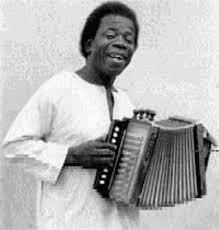
Ayinde Barrister infused traditional musical genres such as Apala, Sakara, and Awurebe into Wéré music and is credited with renaming it Fuji. According to reports, he derived the name from a travel poster advertising Mount Fuji, the highest peak in Japan.
Read Also: Fatai Rolling Dollar: The Roller Coaster Journey of a Juju Maestro
Through his music, Barrister addressed social issues, politics, governance, philosophy of life, and the propagation of Islamic teachings. He was also widely celebrated for his exceptional praise-singing skills.
Mr. Fuji, as he was fondly called, became a source of information, editorial commentary, and entertainment for many Nigerians. In 2013, Professor Olakunle Lawal conducted an academic study titled Sikiru Ayinde’s Music as Commentary on Society, describing Olanbiwonninu’s works as sources of entertainment, religious propagation (Islam), social justice advocacy, economic reflection, democratic discourse, information, education, and moral instruction.
By the 1980s, Ayinde Barrister and Fuji music had gained national acceptance across religious and ethnic divides. He went on to release several successful albums under his label, earning immense fame. These included Iwa (1982), Nigeria (1983), Fuji Garbage (1988), and New Fuji Garbage (1993). His later works included the popular album Reality (2004). In 1982, he was involved in a widely publicized rivalry with fellow Fuji artist Ayinla Kollington.
His outstanding musical talent and cultural influence earned him international recognition. He reportedly received honorary American citizenship in recognition of his contributions to music and culture, particularly following successful performances in the United States. In 1983, he was awarded an honorary PhD in Music by the City University of Los Angeles. In 2006, he was conferred with the national honour of Member of the Order of the Federal Republic (MFR) by President Olusegun Obasanjo.
Barrister was also honoured by Mayor Joseph R. Paolino Jr. of Providence, Rhode Island, who presented him with the Key to the City of Providence. He immortalized this recognition in one of his songs, singing: “Ni Rhode Island l’America, honorary citizenship no fi fun mi, Key to the City of Providence, Mayor Joseph Paolino lo fi fun mi.” Some accounts also state that he received the “Key to the State of Florida” and honorary recognition following the success of an album reportedly recorded at Disney World.
Beyond awards and accolades, Barrister’s true legacy lies in the generation he inspired. Fuji heavyweights such as Wasiu Ayinde also known as K1 De Ultimate, Akorede Babatunde Okunola referred to as Saheed Osupa, and Wasiu Alabi Pasuma acknowledge his pioneering role in shaping the sound and structure of modern Fuji.
Before his death on 16 December 2010, Barrister released over 70 studio albums, many of which remain relevant today. Some of his notable works include Waya Rabi (Vol. 1), Mecca Special (Vol. 3), London Special (1979), Suru Baba Iwa (1981), America Special (1986), Maturity (1987), Current Affairs (1989), Dimensional Fuji (1993), The Truth (1994), and Reality (2008).
More than a musician, Ayinde Barrister was a cultural architect, a soldier-turned-storyteller who transformed a Ramadan wake-up chant into one of Nigeria’s most enduring musical exports.
And in the story of Fuji, his name remains the headline.








Comments