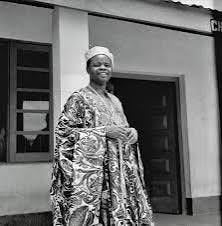
At the foundation of today’s Yoruba film industry lies the tireless work of legendary actors and theatre pioneers whose sacrifices shaped what is now known as Yoruba Nollywood. Among these trailblazers was Christopher Akintola Ogungbe, popularly known as Akin Ogungbe, a man whose name became synonymous with creativity, discipline, and the propagation of Yoruba culture through drama.
Akin Ogungbe was born in 1934 in Abeokuta, Ogun State, into a Christian family of Pa Ogungbe. He was privileged to have formal education but stopped schooling after his Standard Six education. His mother then took him to stay with his grandmother in Abeokuta.
Before venturing into acting, after a short period of staying with his grandmother, he learnt tailoring and briefly learned carpentry. His passion for the performing arts made him abandon his trade after being inspired by the legendary Baba G.T. Onimole, under whom he trained as an apprentice in the early 1950s, where he had his foundational training in the Yoruba Traveling Theatre tradition.
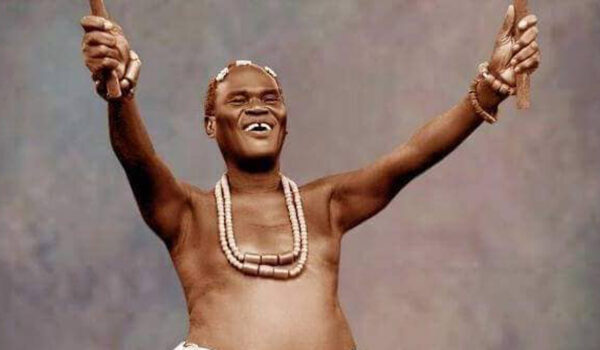
In 1953, Akin Ogungbe established his own theatre group, which he initially named Oluwa lo see Musical Party, later renamed Oguns Concert Party and eventually Ogungbe Travelling Theatre. During this time, Hubert Ogunde was a major inspiration for many theatre practitioners, including Ogungbe, who operated alongside Duro Ladipo and Moses Olaiya (Baba Sala) as a peer and fellow pioneer. As other pioneers like Kola Ogunmola brought their own uniqueness into the Yoruba Traveling Theatre, Ogungbe was known for deploying dynamic elements like acrobatics and fire-eating into his plays to set his troupe apart and engage audiences.
After the formation of his group, his professional play was titled A Terrible Life. It did not take many years before his plays became known within the localized traveling theatre circuit in southwestern Nigeria because of the uniqueness he infused into them, his perseverance in promoting Yoruba culture, and his addressing of social issues.
Read Also: Kola Ogunmola: the Nigerian Folk Opera Refiner
In the 1970s, Ogungbe gained national recognition when his work became a household staple through the Atoka photo-play magazine, and his character as Baba Ibeji in the serialized visual stories made him one of the most popular actors in Nigeria.
In the late 1970s and early 1980s, due to the need for more audience and the motive to make plays reach wider areas, practitioners like Ola Balogun, Adeyemi Afolayan (Ade Love), Hubert Ogunde, and Moses Olaiya led the transitioning of stage plays to film, reducing the rising cost of touring towns, cities, and regions.
In the 1980s and 1990s, Ogungbe followed suit by transitioning into film, where his plays reached a new level of mainstream acceptance. His 1982 film adaptation of Ireke Onibudo and 50/50, produced in 1992, were considered his most successful and widely accepted screen works. He thereafter produced other films like Asiri Baba Ibeji, Ologbo Jigolo, Lisabi, and Igba Funfun.
Through his exceptional plays and films, Ogungbe was conferred with the national title of Member of the Order of the Niger (MON) by President Olusegun Obasanjo in 2003 for his enduring contribution to the Nigerian Film Industry. He also received a Lifetime Achievement Award from the Africa Movie Academy Awards for his notable impact on Yoruba cinema and theatre. Africa Magic and other industry bodies also recognized him as one of the cornerstones of Yoruba cinematic storytelling.
On November 28, 2012, Christopher Akintola Ogungbe died as a legendary Nigerian actor, filmmaker, and director after a 60-year career. Though he was unable to finish his education, Ogungbe provided a platform for notable movie legends like Jimoh Aliu, who later formed the Jimoh Aliu Concert Party in 1966 after completing his apprenticeship; others include Jide Kosoko, Bolaji Amusan, and his son, Segun Ogungbe, who had been acting since he was three years old, among many others who learned directly or indirectly from his tutelage.







Comments